
Understanding & Using Angelina Fibres in Your Felting or Spinning Projects
Posted on
Understanding and Using Angelina Fibres in Your Felting or Spinning Projects
Angelina fibres are a versatile way to introduce shimmer, texture, and visual depth to felting and mixed‑media projects. Lightweight, reflective, and available in a wide range of colours, they can be used subtly or boldly depending on your creative goals. This guide covers what they are, how they behave, and how to use them effectively in both needle and wet felting.
Picture Felts by Philippa
What Are Angelina Fibres?
Angelina fibres are ultra‑fine polyester fibres designed to add reflective effects to textile work. They come in two main types:
- Heat‑bondable fibres: These fuse together when heated, forming a thin, flexible sheet.
- Non‑bondable fibres: These remain loose and are ideal for blending directly into wool.
Both types can be used in felting, spinning, papercraft, embroidery, and other fibre‑based crafts.
How to Heat‑Bond Angelina Fibres
Heat‑bonding creates a shimmering sheet that can be cut, stitched, layered, or incorporated into felting projects.
Steps
- Use a very small amount: Angelina expands significantly; a pinch is usually enough.
- Spread fibres thinly and evenly: Thin layers bond more cleanly and stay flexible.
- Place between baking parchment: This prevents fibres from sticking to your iron.
- Press with low heat: Short presses work best; too much heat can dull the shine.
- Allow to cool before lifting: The bonded sheet will peel away easily once cool.
Using Angelina Fibres in Needle Felting
Angelina can be blended into wool or applied to the surface for decorative effects.
- Blend a tiny amount into wool for an even, subtle shimmer.
- Add surface sparkle by laying fibres on top and felting them in lightly.
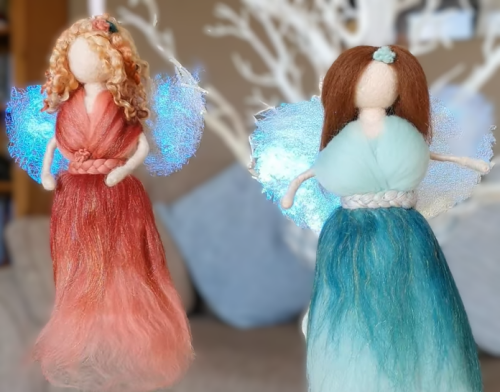
- Use bonded sheets as accents such as wings, highlights, or decorative shapes.
- Enhance character details like frost, water effects, or magical elements.
Using Angelina Fibres in Wet Felting
Angelina behaves well in wet felting when used sparingly.
- Sprinkle fibres over your layout for a light, scattered shimmer.
- Trap fibres under a thin wool layer to soften the shine and prevent shedding.
- Layer colours for depth to create multi‑dimensional reflective effects.
Using Angelina Fibres in Spinning
Angelina fibres add subtle shimmer, texture, and visual depth to hand‑spun yarns. Because they are lightweight and highly reflective, a very small amount creates noticeable effect without overwhelming the wool.
How to Incorporate Angelina into Spinning
- Blend a tiny amount into your fibre prep: Card or hand‑blend a pinch of Angelina into your wool before spinning. This distributes the sparkle evenly throughout the yarn.
- Create streaks or highlights: Instead of blending fully, lay small wisps across your fibre batt or roving to produce intentional flashes of shimmer.
- Use in art yarns: Angelina works beautifully in textured or core‑spun yarns where you want bold visual interest.
- Combine colours for layered effects: Mixing two or more Angelina shades creates depth, especially in thicker yarns.
- Keep proportions low: Too much Angelina can make drafting slippery. A light touch keeps the fibre easy to spin.
Tips for Best Results Using Angelina Fibres
- Use less than you think: Angelina is highly reflective, and too much can make wool slippery or plasticky.
- Test a small sample first: Different wools hold Angelina differently, so sampling helps you find the right balance before starting a larger piece.
- Card gently: Over‑carding can break the fibres or create static, making them harder to control.
- Match fibre length: Angelina blends best with medium or long staple wools such as Corriedale, BFL, or Merino.
- Keep heat low when bonding: Excess heat can dull the shine of heat‑bondable Angelina.
- Mix colours for custom effects: Combining shades (for example, cobalt blue and red) creates unique reflective tones and depth.