
Making 3D Vessels in Wet Felting
Posted on
Making 3D Vessels in Wet Felting
Creating 3D vessels in wet felting is all about using a resist to shape wool into a seamless, hollow form. This method works beautifully for bowls, pods, vases, lanterns, and sculptural pieces. The process is simple once you understand the sequence: layout, felt, full, cut, shape, and finish.
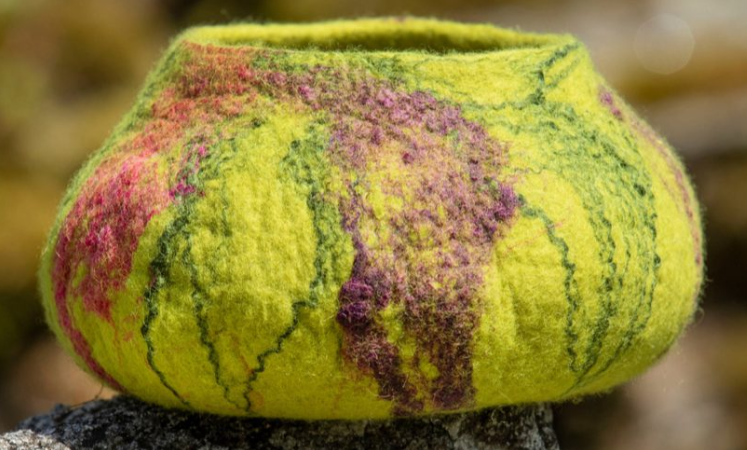
Materials
- Wool tops or batts (merino, Corriedale, or mixed fibres)
- Flat resist (plastic sheet)
- Warm soapy water
- Bubble wrap or bamboo mat
- Towel
- Sharp scissors
- Optional decorative fibres (silk, nepps, prefelt, Angelina)
1. Preparing the Resist
The resist determines the final size and shape of your vessel.
- Choose a simple shape such as a circle, oval, or square for beginners.
- Increase the resist size by 30–40% to account for shrinkage.
- Use flexible material so you can peel it out easily later.
2. Laying Out the Wool
This is where the structure and strength of the vessel are built.
- Lay wool evenly over one side of the resist, extending fibres beyond the edges.
- Fold the overhanging fibres around the edges to the other side.
- Repeat on the second side, alternating fibre direction for strength.
- Aim for 3–5 layers depending on the thickness you want.
Each layer should be thin, even, and smooth to avoid weak spots.
3. Wetting and Felting
- Wet the wool thoroughly with warm soapy water.
- Press gently to remove air pockets and help fibres settle.
- Begin light rubbing in small circles, gradually increasing pressure.
- Flip regularly to keep both sides felting evenly.
At this stage, the wool should begin to tighten around the resist.
4. Fulling the Vessel
Once the fibres are holding together:
- Roll the piece in a mat or bubble wrap from different angles.
- Apply more pressure as the wool strengthens.
- Check edges to ensure they are firm and even.
- Continue until the wool shrinks tightly around the resist.
This is where the vessel gains strength and structure.
5. Cutting the Opening
- Decide where the opening will be — central, off‑centre, or slit‑style.
- Cut carefully through one layer at a time to avoid uneven edges.
- Remove the resist once the opening is large enough.
- Shape the rim by rubbing the cut edge until smooth and firm.
The opening design dramatically affects the final look.
6. Shaping and Hardening
With the resist removed:
- Continue fulling by rubbing, throwing, or rolling.
- Shape the vessel using your hands, a balloon, a bowl, or a form.
- Rinse thoroughly to remove soap.
- Stuff with towels to dry in shape.
The more you full, the stronger and more sculptural the vessel becomes.
7. Decoration Options
- Prefelt motifs applied during layout
- Silk hankies or fabric for texture
- Cracked or cut‑back designs
- Layered colours for depth
- Angelina fibres for subtle shimmer
- Resist‑based protrusions for sculptural forms
Common Troubleshooting
- Soft or floppy walls: Add more layers or full longer.
- Uneven edges: Check fibre coverage around the resist.
- Wrinkles or thin spots: Smooth layers more carefully during layout.
- Opening stretches too wide: Full the rim more firmly.
Next steps
Article on How to make a hand felted 3D pot by TheFeltStudio
and two video tutorials Wet Felting a Bowl Fibre Artsy and Craftsy
Nicola Brown Wet felting vessel tutorial