
Depth and Detail: How to Create Stunning 2D Needle Felted Scenes
Posted on
Order of Work for a 2D Needle Felted Picture
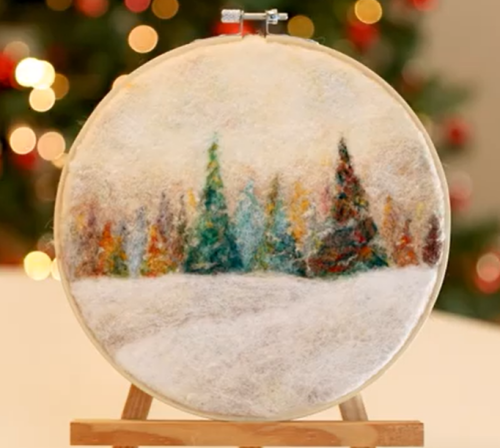
Image by MrsCuteFelts
1. Prepare Your Base
- Use a firm felt sheet, pre‑felt, or flat wool batt as your canvas.
- Secure it on a felting mat or foam pad so you can poke evenly.
2. Lay Down the Background First
- Start with large areas: sky, ground, water, or backdrop colours.
- Use thin layers of wool, spread evenly, and felt them down lightly.
- Blend colours at this stage (e.g., gradient sky or variegated grass).
- Keep pokes shallow so fibres stay flat and smooth.
3. Block in Main Shapes
- Add the big subjects (trees, animals, houses) as flat silhouettes.
- Focus on placement and proportion, not detail yet.
- Felt them firmly enough to hold, but leave room for layering.
4. Add Mid‑Tone Shading
- Introduce darker or lighter wool to suggest form and depth.
- Shade edges of objects (e.g., darker under a tree, lighter on top).
- Blend fibres gently into the base with angled pokes for soft transitions.
5. Build Highlights
- Use lighter fibres sparingly to catch light (e.g., sunlit fur, reflections).
- Place highlights after shading so they sit on top and remain crisp.
- Keep fibres wispy—too much can overpower the picture.
6. Refine Details
- Add fine lines or textures: branches, whiskers, fur direction, or ripples.
- Use a finer needle for precision.
- Layer small amounts of wool gradually rather than all at once.
7. Depth and Contrast
- Revisit areas to strengthen contrast: deepen shadows, brighten highlights.
- Add foreground elements last (flowers, grasses, small animals).
- This ensures they sit “on top” visually and don’t get buried.
8. Finishing Touches
- Smooth uneven areas with shallow pokes.
- Trim stray fibres with scissors if needed.
- Step back and check balance—adjust colour intensity or add tiny accents.
Quick Rule of Thumb
- Background → Mid‑tones → Highlights → Details → Foreground This order mimics painting and ensures your picture builds naturally from back to front.
Next Steps a Mini picture Julie's Felted Friends and MrsCuteFelts with a magical winter wonderland picture and Faelanda Fibre Art with a Mediterranean windowsill