
Joining Needle Felted Limbs & Parts Together
Posted on
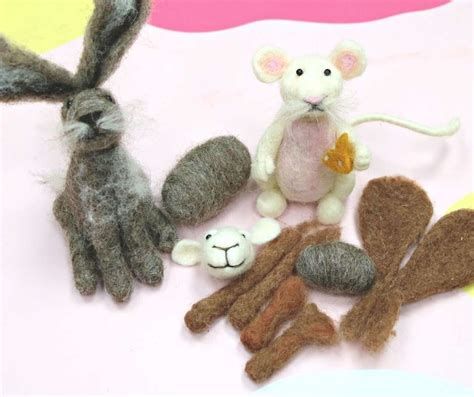
Image The Felt Hub
Needle Felting Tutorial: Adding and Joining Parts
Materials Needed
• Firmly felted body parts (e.g. head, limbs, tail)
• Felting needle (medium or fine gauge)
• Wool roving in matching or blending shades
• A wool or foam mat
1. Prepare Each Part Separately
Before joining, make sure each part is well-shaped and firmly felted. This prevents distortion and gives you control over proportions.
• Felt each piece until it holds its shape and resists compression.
• Leave a small area at the join slightly softer to allow for blending.
2. Position and Anchor
Decide where the part will attach and gently press it into place.
• Hold the part against the base shape.
• Use your needle to tack the join with shallow pokes, anchoring the wool without distorting the shape.
3. Blend with Loose Wool
To create a seamless join, use a small amount of loose wool.
• Pull thin strips of roving and wrap them around the join.
• Felt gently in a circular motion, working from the outer edge inward.
• Alternate angles to avoid creating a ridge or line.
4. Reinforce the Join
Once the part is attached and blended, reinforce for durability.
• Felt deeper into the join using a slightly thicker needle.
• Add more wool if needed to smooth transitions or bulk out the area.
• Check symmetry and adjust as needed.
5. Refine and Finish
After joining, refine the surface and add texture or detail.
• Use a fine needle to smooth any fuzzy areas.
• Add surface wool for fur, skin texture, or colour blending.
• Shape final contours with light, controlled pokes.
Tips for Success
• Always felt gently at first, as rushing can distort your work.
• Use matching wool for invisible joins or contrasting wool for stylized seams.
• Practice on small shapes before joining complex parts.
Next steps here are two videos which show the joining processes The Felt Hub and Bethany Thiele, Art Teacher