Give It a Spin! Easy Drop Spindle Yarn for Felting
Posted on
A simple guide to spinning yarn you can use in your felting projects
Spinning your own yarn might sound like an extra step, but it’s one of the easiest ways to create the texture, thickness, and colour you want for your felting projects. A simple top whorl drop spindle lets you make small batches of beautiful, custom yarn that blend perfectly into your work, no wheel, no fuss, just wool and lots of fun.
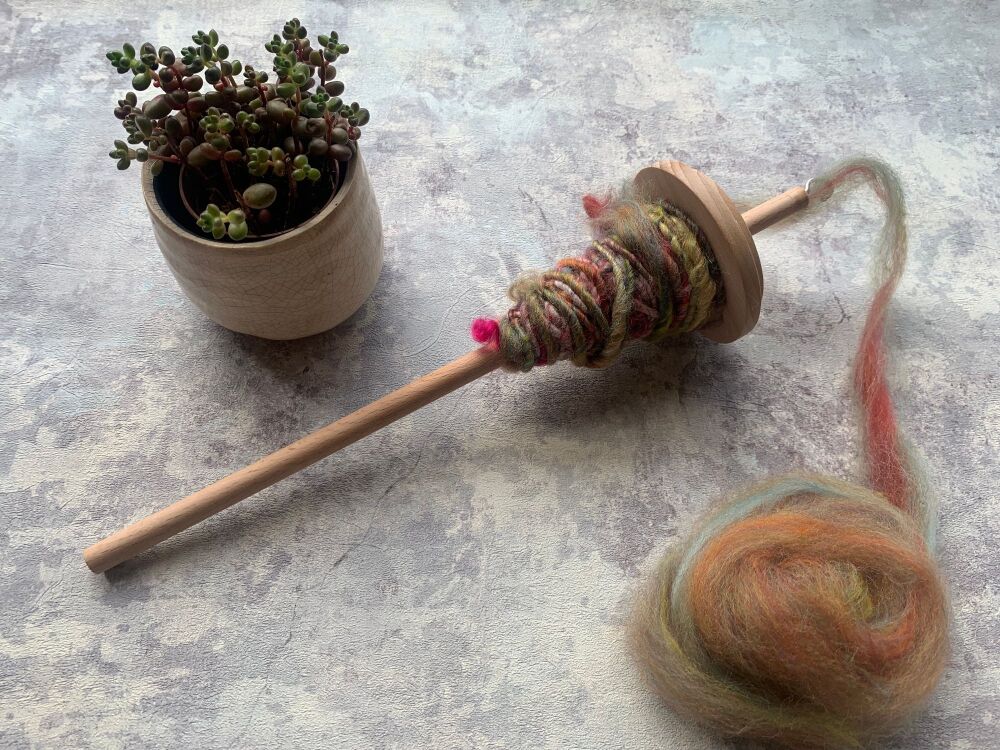
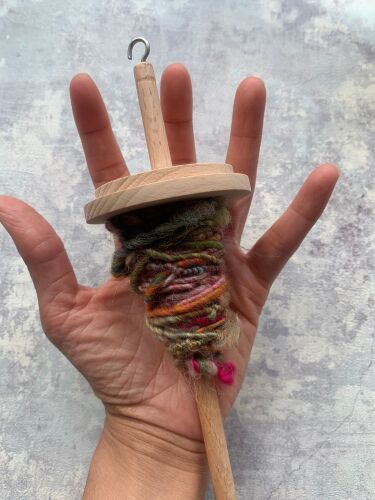
A top whorl drop spindle is one of the easiest and most portable ways to spin your own yarn.
A top whorl drop spindle is a spindle with the whorl (the round disc) at the top of the shaft and the hook at the top.
How to Use a Top Whorl Drop Spindle
A simple step‑by‑step method
1. Attach Your Leader Yarn
• Tie a short piece of yarn (the “leader”) to the shaft just below the whorl. • Bring it up and hook it into the notch on the whorl. • Loop it over the hook at the top.
2. Start the Spin
• Hold the spindle below the whorl. • Give it a firm clockwise spin. • Let it hang freely, this is where the twist builds.
3. Draft Your Fibre
• Hold your wool in your fibre hand. • With your other hand, gently pull out a small amount of fibre, this is drafting. • The twist from the spindle travels up into the drafted fibres, turning them into yarn.
4. Let the Twist Build
• Allow the spindle to keep spinning while the twist climbs up the fibres. • If it stops, give it another spin. • Keep drafting small amounts at a time.
5. Wind On
• When your yarn length gets too long, stop the spindle. • Wind the spun yarn onto the shaft, just above the whorl. • Reattach the yarn to the hook and start spinning again.
6. Keep Going
• Spin → draft → wind on → repeat. • Your yarn will get more consistent with practice.
7. Set the Twist
• When you’ve spun enough, wind it into a skein. • Soak in warm water, gently squeeze, and hang to dry. • This “sets” the twist, so the yarn behaves nicely. Please see our full picture guide HERE.
Using Your Hand Spun Yarn in Felting Projects
Hand‑spun yarn is fantastic for felting because it blends beautifully with wool and adds structure, texture, and detail.
1. Surface Decoration (Needle Felting)
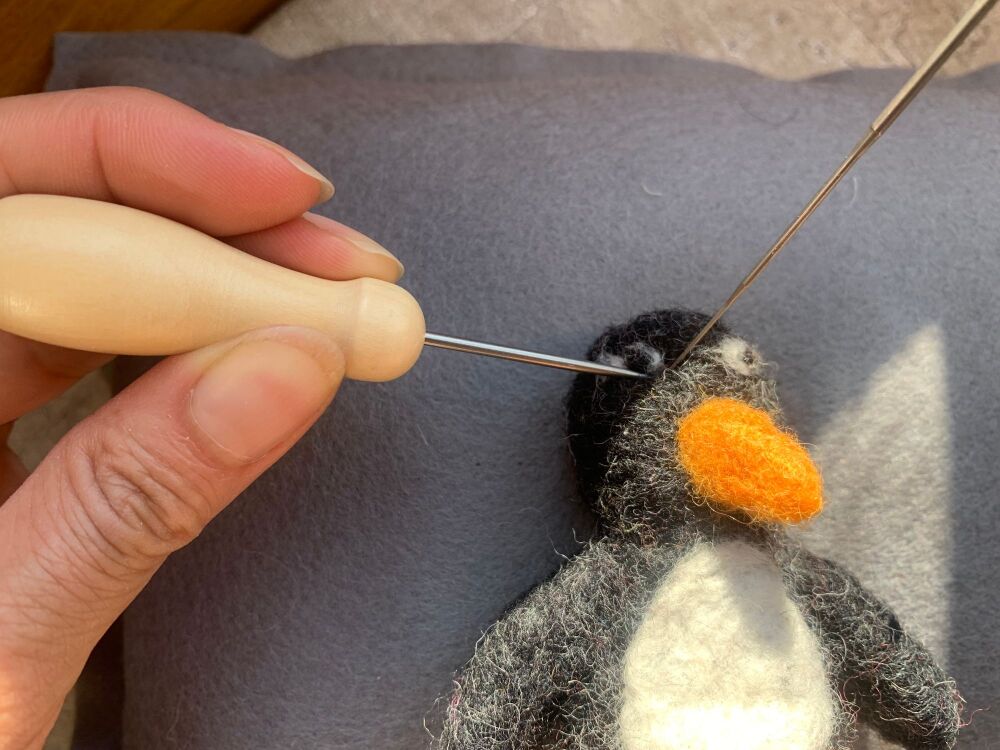
• Place the yarn onto a felted surface. • Needle felt lightly along the edges to secure it. Perfect for: outlines, spirals, stripes, vines, lettering.
2. In Wet Felting
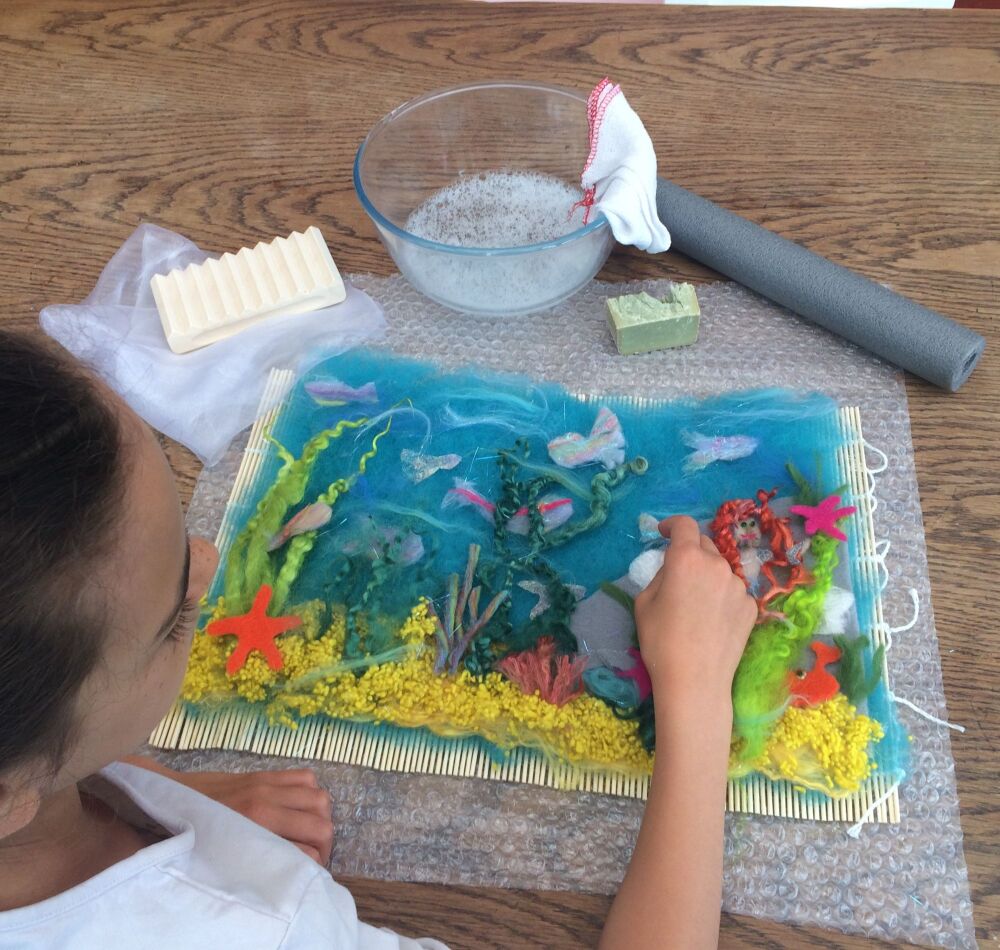
• Lay the yarn on top of your wool layout. • Wet felt as normal, the yarn will partially sink in and bond. Great for: borders, stems, veins, hedgehog spikes, textured lines.
3. As a Structural Element
• Use tightly spun yarn as a core for small shapes. • Wrap wool around it and needle felt.
4. As Embellishment
• Add sparkle fibres, colour changes, or thick‑thin textures. • Spin art yarn for dramatic effects. Ideal for: fantasy feathers, costume pieces, mixed media felting.
Andrea Love video on spinning