
Yes, You Can Make Beautiful Needle Felted Feathers: Four Clear Methods
Posted on
How to Make Needle Felted Feathers
A complete guide to four beautiful techniques
Feathers are a versatile and expressive element in needle felting. They can be flat and graphic, soft and organic, sculptural, flexible, or highly structured. Below are four distinct methods for creating felted feathers, each suited to different styles, models, and projects.
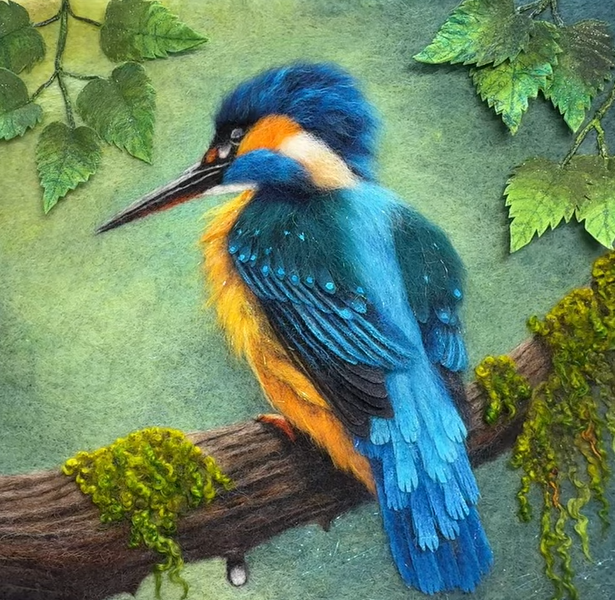
Image Helen Winter Textile Art
The Picture Perfect Flat Felted Feather
Crisp, flat, stable, perfect for embroidery hoops and decorative pieces
1. Create the Feather Base
- On a sheet of baking paper, lay wool in vertical strips. Keep the layer thin but without gaps. You can include several colours or shades.
- Cut iron-on hem tape into strips and place them over the wool.
- Add another thin layer of wool on top.
- Add a second layer of iron‑on tape, then another layer of wool.
- Cover with a second sheet of baking paper.
2. Fuse the Layers
- Iron the wool “sandwich” for about 10 seconds.
- Flip the entire piece and iron the other side.
- Check whether the layers have fused; if not, repeat until fully bonded.
3. Stiffen the Sheet
- Paint the entire sheet with fabric stiffener.
- Allow it to dry completely.
4. Cut and Shape
- Cut feather shapes from the stiffened sheet.
- Layer multiple feathers to create wings or decorative groupings.
5. Add Detail
- Brush pastel, chalk, or paint pens along the shaft and edges to create highlights and lowlights.
6. Attach
- Pin the feathers in place on your picture or model.
- Cover the base and edges with carded wool and needle felt to secure.
- Alternatively, leave the outer edges unstiffened and use these fibres to attach directly.
The Pompom Technique Felted Feather
Soft, organic, sculptural, flexible
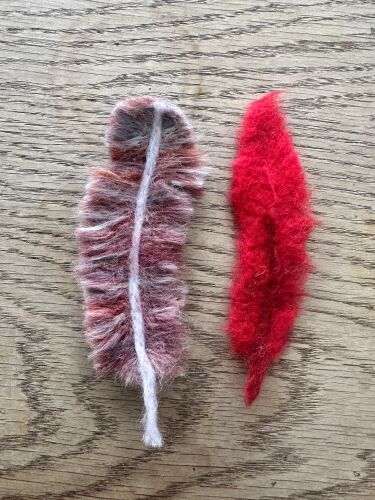
1. Lay Out the Wool
- Place wool in horizontal lengths about three or four ruler widths long and roughly four inches in length.
- Place wool without gaps, blending colours or shades if desired.
2. Fold Around the Ruler
- Lay a ruler at the left edge of the wool.
- Fold the wool over with the ruler, then fold again, creating three or four layers.
- Carefully slide the ruler out.
3. Flatten and Form
- Flatten the wool tube with a multi needle tool or a single needle, working down the centre only.
- Add a thin strip of twisted wool or fine yarn to form the shaft (rachis) and felt it on firmly.
- If you want the feather to hold a shape, wrap the centre wool around a thin wire 24 or 22G before felting it to the shaft.
4. Shape the Feather
- Cut the edges (currently looping) open on the felted roll, and shape into a feather silhouette (the vane), tapering at the top and bottom.
- Gently brush the fibres to separate the woollen feather (barbs).
5. Finish
- Add wax or fabric stiffener if you want a sleeker or firmer finish.
- Keep the edges soft and slightly wispy, especially near the base where downy barbs naturally appear.
- Add chalk or paint pens for highlights and shading.
The Showy Shaft Flexible Felted Feather
Poseable, structured, realistic, layered
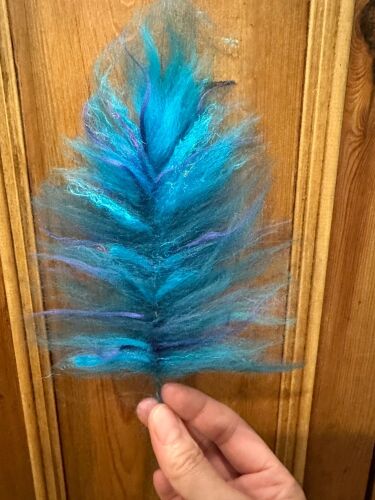
1. Prepare the Wire Spine
- Cut a thin piece of wire 24g double the length of your desired feather, plus extra for twisting.
- Fold the wire in half.
- Lay out small lengths of wool no longer than the staple length (the length of a single wool fibre).
- These lengths can taper at the ends and thicken in the middle, mimicking natural feather structure.
2. Build the Feather
- Place the first small length of wool at the folded end of the wire.
- Fold the wool over the wire and hold it firmly.
- Twist the wire by hand or with pliers to secure the wool.
- Add the next length of wool, pinch it in place, and twist again.
- Continue adding and twisting until the entire feather length is built.
3. Shape and Refine
- Comb out the woolly barbs you have created.
- Cut the feather silhouette (the vane) with scissors.
- Leave the edges fluffy or add wax or stiffener for a sleeker finish.
4. Add Colour and Detail
- Paint the metal spine or the centre of the feather with acrylic pens or chalk to create natural shading.
- Attach by using an awl to make a small hole in your bird, then glue the feather in place. Alternatively, pin the feather where you want it and cover the wire tip with wool to secure it.
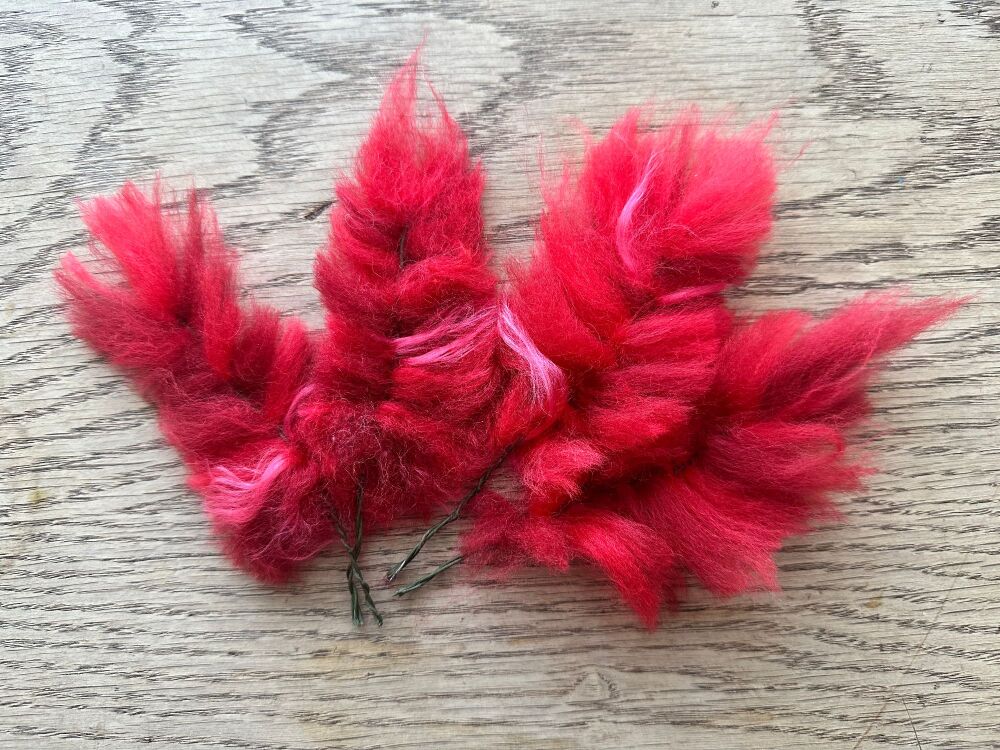
The Felt Sheet Fast Feather
Structured, clean, decorative, excellent for costume or display
This technique focuses on creating feathered sections rather than individual feathers. It is ideal for building wings, tails, and layered plumage.
1. Create the Base Shapes
- Cut feathered silhouettes from thin pieces of flat felt (commercial or handmade).
- Study the shapes of the bird’s prominent feathers—tail, primaries, secondaries—and cut accordingly.
2. Add Wool Texture
- Lay wool in horizontal, overlapping lines across each felt shape.
- Use multiple shades or colours, and incorporate fibres such as silk, bamboo, or Angelina for shine.
3. Felt the Surface
- Needle felt the entire surface with a multi‑needle tool or a single needle until flat and secure.
4. Trim and Refine
- Trim edges and remove overly fluffy fibres.
- Add fabric stiffener or wax if you want the sections firmer or flatter.
5. Assemble
- Layer the feathered sections to build wings or tail structures.
- Pin in place, then needle felt to attach using additional wool in matching colours.
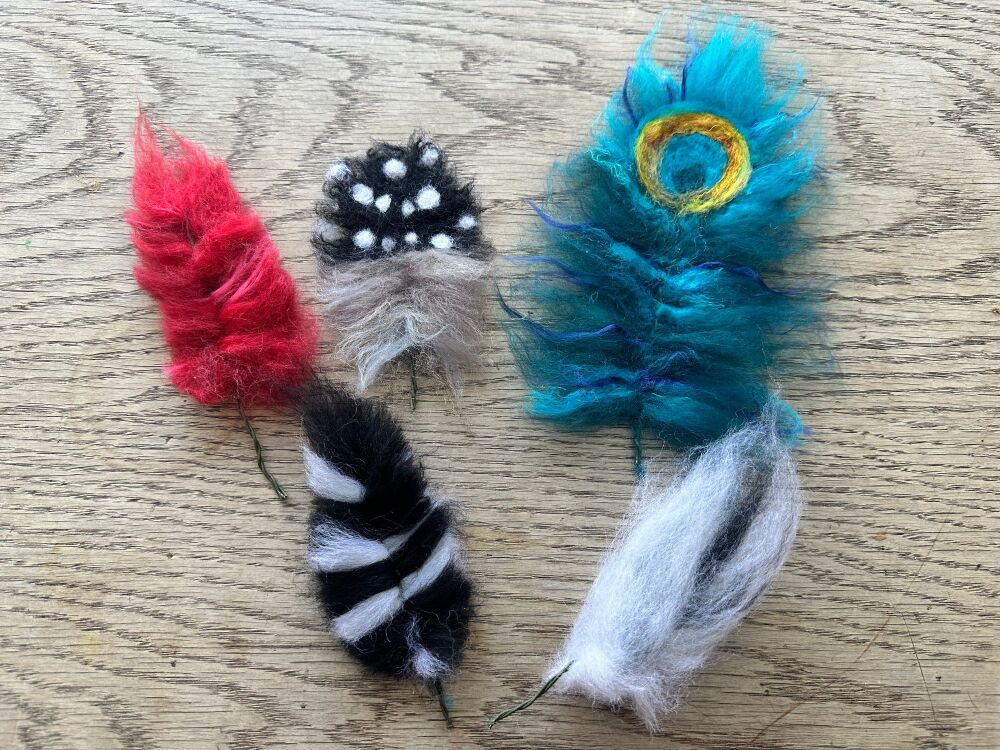
Next steps, videos on feathers making with Wooly Wildlife and Helen Winter Textile Art
and an article on owl feathers with Fit To Be Loved