
How to Use an Awl for Felting
Posted on
What an Awl Does in Felting
An awl opens space inside wool rather than felting fibres. It’s used to make holes for eyes or wires, create small indentations like nostrils or joint sockets, protect needles from strain, and shape firm wool without over‑compacting it. It’s most useful in dense 3D work where a needle can’t reach safely.
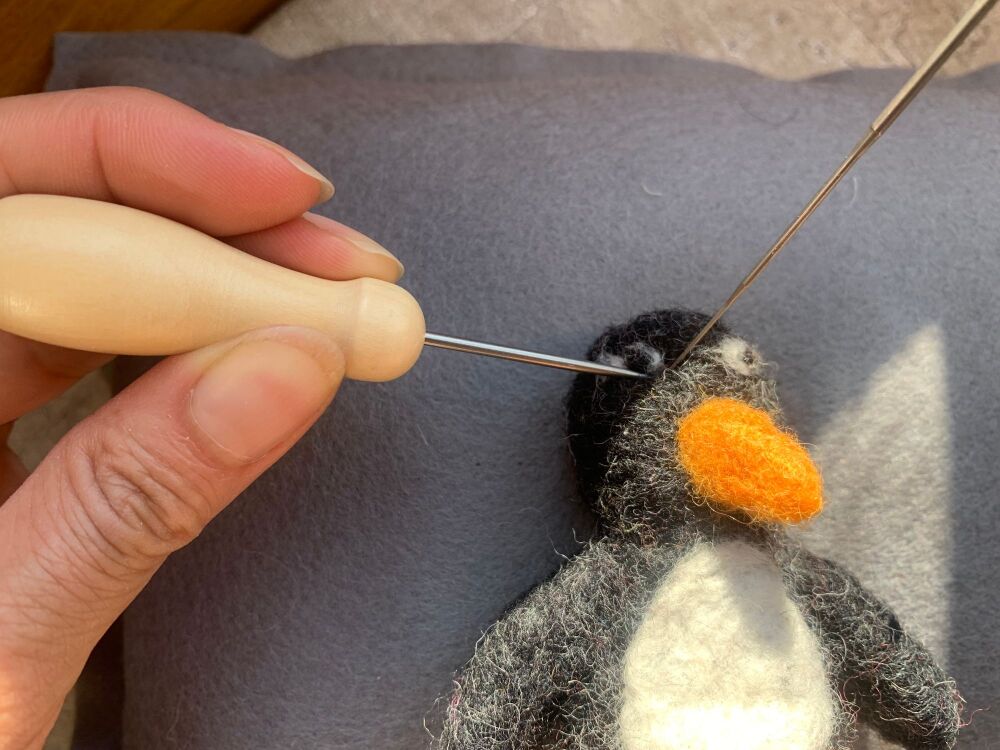
How to Hold and Use the Awl
- Hold it like a pencil with fingers behind the point.
- Apply light pressure and rotate only if you want to widen the opening.
- Always work on a felting pad to prevent slipping.
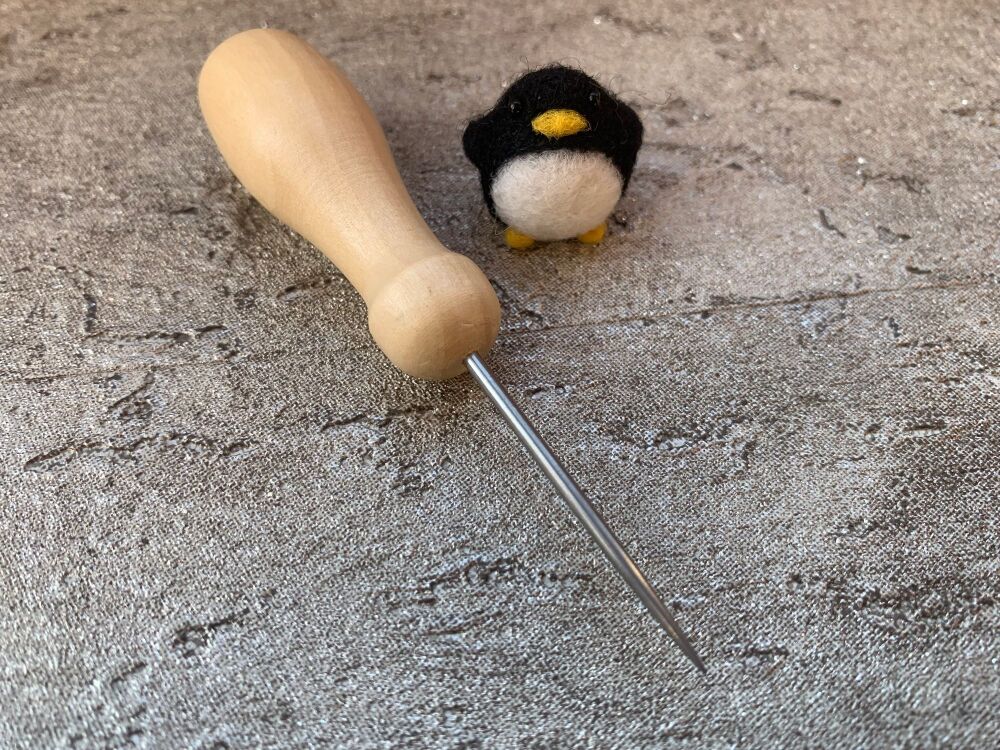
Creating Holes for Eyes or small limbs, whiskers, and claws and beaks.
- Firm the wool first.
- Mark the spot with a light needle poke.
- Insert the awl to the depth you need.
- Widen slightly with a small rotation with pressure.
- Remove the awl and place the eye or refine the opening with light felting.
Making Indentations
For nostrils or other small holes, insert the awl and deepen gradually. A little needle felting afterward helps the shape hold. The awl creates depth without over felting the surrounding area.
Working Safely
- Push away from your supporting hand.
- Keep fingers behind the point.
- Use a firm pad.
Caring for Your Awl
- Wipe the point clean.
- Keep the tip sharp.
- Avoid dropping it to prevent bending, keep out of the way of children.
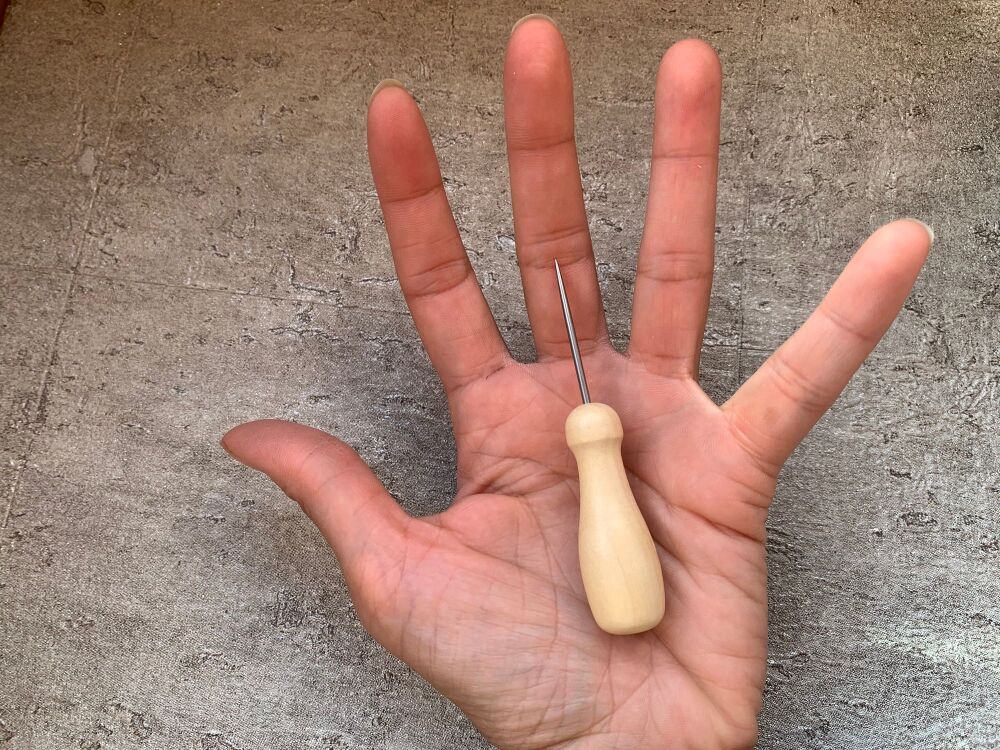
When to Use an Awl vs a Needle
Choose an awl for depth, clean openings, and protecting your needles. Choose a needle when you need to felt fibres together rather than open space.