
Wet Felting Texture Techniques: How to Create Ridges, Lumps and Contrast with Templates
Posted on
Wet Felting Texture Techniques: How to Create Ridges, Lumps and Contrast with Templates
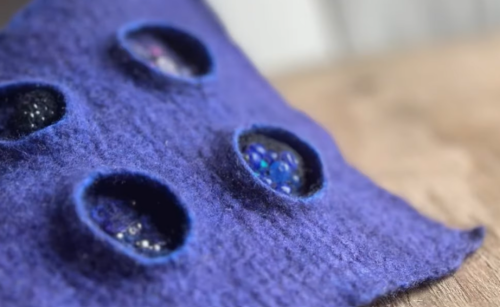
Pictures Muff Merino.
When you want to build strong surface texture in wet felting, the most important principle is controlled shrinkage. Wool naturally pulls inward as it felts, and a template lets you decide where that pull happens. By shaping the shrinkage, you create ridges, dips, raised areas, and contrasting surfaces without needing heavy sculpting.
Ridges appear when you place extra wool along the edges of a template or around the edges of a cut‑out shape. The thicker wool shrinks more slowly, while the thinner surrounding wool shrinks faster, which forces a raised line to form. You can make these ridges sharper by using prefelt strips or by lightly needle‑felting the wool in place before wetting so it doesn’t drift.
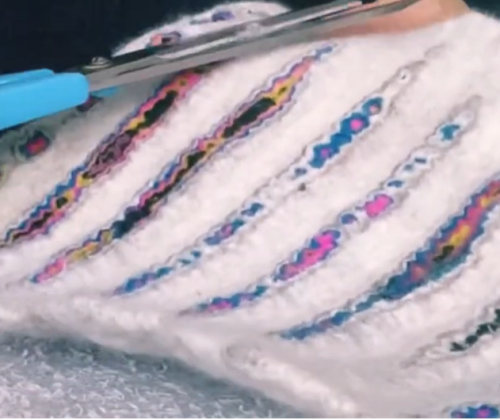
Lumps and raised textures come from adding small pockets of wool, rolled beads, or prefelt shapes on top of your base layers. When you cover these with a thin layer of fibre, they felt into the surface and create soft, organic bumps. If you want more dramatic height, place the lumps directly on the template edge so the shrinkage pulls tightly around them and exaggerates the shape.
Contrast is easiest to achieve when you combine different thicknesses, different colours, or different fibre types. A thin layer over a thick area shrinks more, which makes the underlying shape stand out. Using prefelt gives you crisp, defined edges, while loose fibres create a softer, blended look. You can also layer multiple templates inside one piece to create tiered surfaces that shrink at different rates.
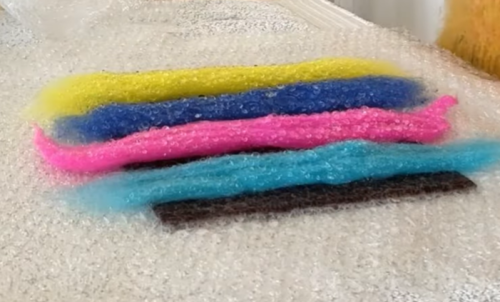
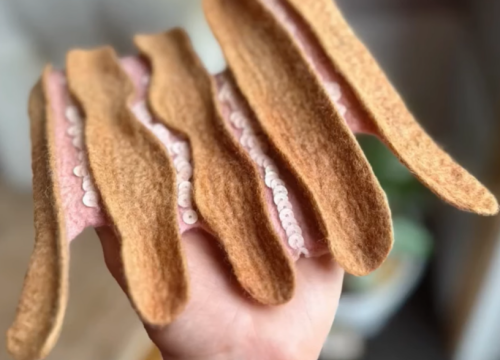
Templates themselves can be simple or complex. Templates with raised or padded areas give you sharper ridges. Using stacked templates lets you build multi‑level textures that appear naturally once the wool tightens.
Combining needle and wet felting gives you even more control. Needle‑felting shapes lightly before wetting locks the fibres so they stay exactly where you want them. After the wet felting is complete, you can needle‑felt again to sharpen edges, define ridges, or add fine contrast lines.
Five Tips for Confidence Building
- Wool is forgiving — Even if your layout looks uneven or a ridge forms unexpectedly, the fibres naturally self‑correct as they shrink, which removes the fear of making mistakes.
- Make small tests — Creating tiny samples with the same wool and template shapes shows you exactly how the fibres behave, giving you predictable results before starting a full piece.
- Trust shrinkage direction — Once you see how wool pulls around a template, you can rely on that movement to form ridges and texture, which makes the process feel controlled and intentional.
- Use lighter layers — Beginners often add too much wool, which slows felting and hides texture. Thinner layers felt faster and respond better, giving you more confidence in your technique.
- Embrace organic results — Texture work is naturally irregular, and that irregularity is part of its beauty. When you stop expecting perfect symmetry, you feel freer to experiment.
Lines and Resist and Ridges and Boarders Muffs Merino
Wet Felting 101: The Resist Technique Explained UNE
An article you might like Wet felted Feathers