
Your First Prefelt: Learn the Basics with Confidence
Posted on
Guide to Making Prefelt
Prefelt is a versatile wet felting basic. It’s simply wool that’s been partially felted, firm enough to lift, cut, and shape, but still soft enough to bond beautifully into your next project. Whether you’re making appliqué pieces, backgrounds, or crisp little cut‑outs, prefelt gives you lots of creative options. Here’s how to make it step by step, plus easy fixes for anything that goes a bit wobbly along the way.
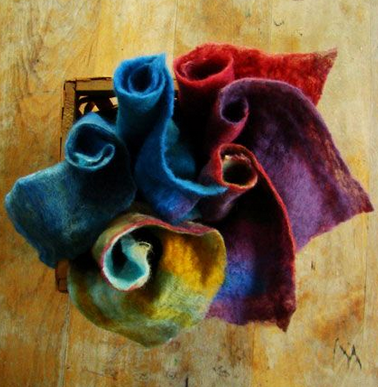
Image Fiona Duthie
Materials
• Wool tops or batts (merino is ideal)
• Warm soapy water (a little olive‑oil soap is perfect)
• Bubble wrap or a bamboo mat
• Netting or voile
• Towel
• Optional: template or ruler for even thickness
Step by Step: How to Make Prefelt
1. Lay Out Your Wool
• Cover your surface with netting.
• Pull off thin, even wisps of wool.
• Lay the first layer all in one direction.
• Add a second layer at 90°, then a third if you want a thicker prefelt.
• Aim for even coverage, as thin spots will stay thin.
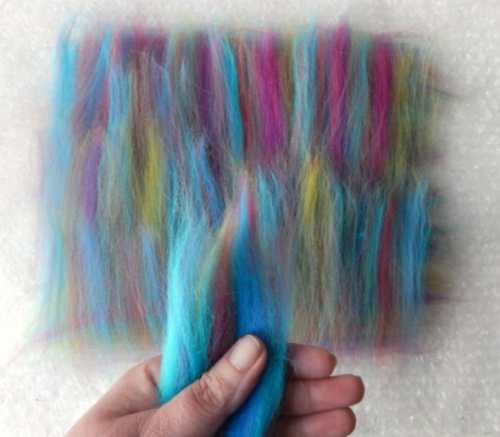
Image Fiona Duthie
2. Wet the Wool
• Place a top layer of netting over your layout.
• Sprinkle warm soapy water evenly across the surface.
• Press down gently with flat hands to help the water soak through.
• The wool should be damp, not swimming.
3. Start Gentle Felting
• With your hands flat, rub lightly in small circles.
• Keep the pressure soft, you’re encouraging fibres to tangle, not fully felt.
• When the surface starts to hold together, flip the whole thing (with netting) and repeat on the back.
4. Roll to Strengthen
• Roll the wool inside a bamboo mat or bubble wrap.
• Roll 20–30 times, unroll, rotate the piece, and roll again.
• Stop as soon as the wool lifts as one sheet but still stretches slightly.
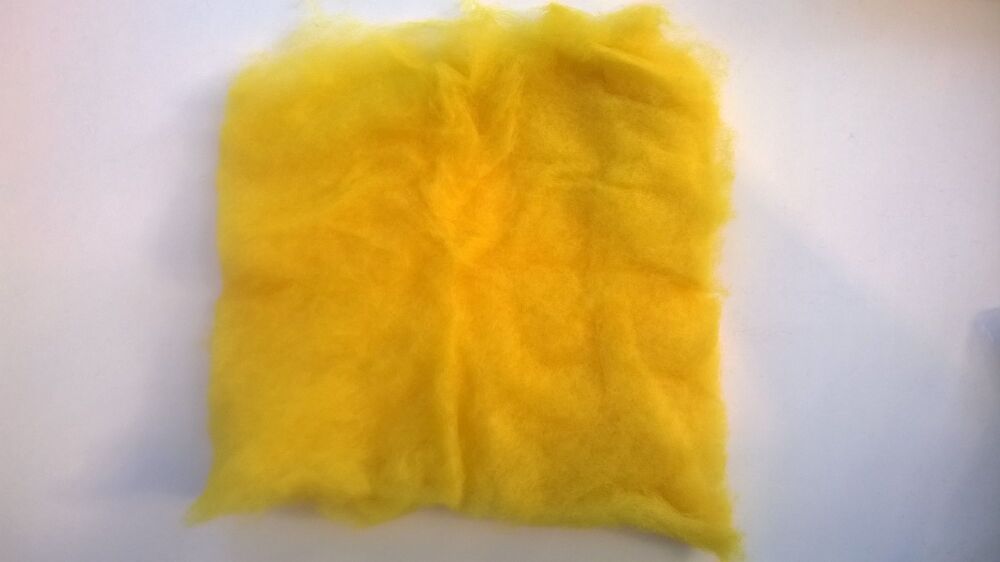
5. Check the Prefelt Stage
You’ve reached prefelt when:
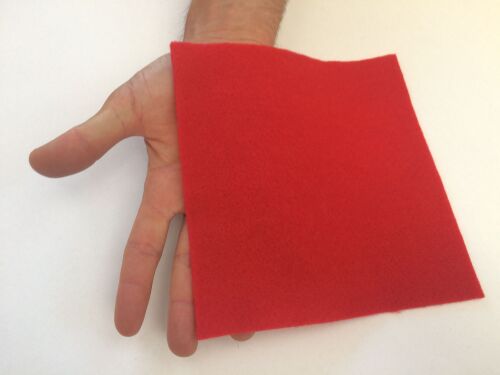
• It holds together when lifted
• It can be cut cleanly with scissors
• It still feels soft, stretchy, and flexible
• The fibres are NOT fully locked, they should still migrate when refelted
6. Rinse & Dry
• Rinse out the soap with warm water.
• Press in a towel to remove excess moisture.
• Lay flat to dry.
Tips for Beautiful Prefelt
• For crisp shapes: make your prefelt slightly firmer.
• For soft, blendable edges: stop felting earlier.
• For patterned prefelt: add stripes, dots, or colour blocks before wetting.
What You Can Do With Prefelt
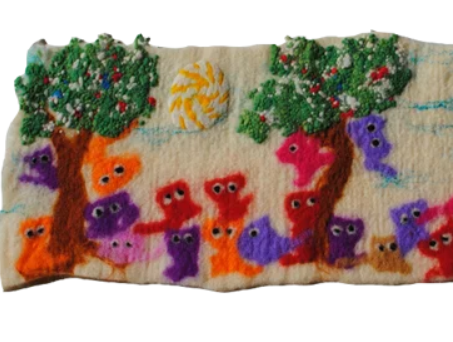
• Cut shapes
• Make appliqué pieces
• Create backgrounds for needle felting or wet felting
• Add surface designs to needle felted or wet felted projects
Prefelt Troubleshooting Guide
1. My prefelt is too soft and falls apart when I lift it
• You stopped a little early, totally normal.
• Lay the sheet back down, re‑wet lightly, and rub gently for another minute or two.
• Roll 10–20 more times.
• Check again: it should lift as one piece but still feel stretchy.
2. My prefelt is too firm, it feels like proper felt
• You’ve gone a bit too far, but it’s still usable.
• Use it for crisp shapes, appliqué, or anything that needs clean edges.
• For softer, blendable edges next time: Reduce rolling or Keep your rubbing light or Stop as soon as the fibres hold together
3. It’s uneven, thick in some places, thin in others
• This usually comes from uneven wool layout.
• For this sheet: Keep it as a “textured” prefelt or cut around the thin spots.
• For next time: Use thinner wisps. Hold your wool higher when drafting. Check coverage by gently lifting the netting and looking for bald patches.
4. It’s sticking to the netting
• You may have rubbed too hard too early.
• Peel the netting back slowly at a low angle.
• If it clings: Add a little more soapy water. Press down with flat hands. Wait 10–20 seconds, then try again.
5. The edges are curling
• This happens when the edges felt faster than the centre.
• Gently stretch the sheet back into shape.
• When rolling, rotate the piece more often, so all sides get even pressure.
6. My colours are blending more than I wanted
• You’ve rubbed or rolled a bit too enthusiastically.
• For sharp colour blocks next time: Stop earlier or use firmer wool layouts or keep rubbing light and controlled.
7. My prefelt shrank more than expected
• Shrinkage comes from heat, soap, and pressure.
• To reduce shrinkage next time: Use cooler water or use less soap or roll fewer times or keep pressure gentle
8. The sheet is pilling or fuzzy on the surface
• You may have rubbed with too much friction.
• Try using netting for longer before switching to direct hand contact.
• A little fuzz is normal, it helps the prefelt bond beautifully later.
Quick Rule of Thumb
If it lifts as one piece but still stretches, you’re in the prefelt zone. Anything firmer is still useful, just for different effects.
Next steps see this video making many prefelts at the same time from Muffs Merino and picture written tutorial Fiona Duthie.