The Woolsmith’s Handbook Blog

 RSS Feed

» Listings for May 2026

  1. A Complete Guide to Using Prefelt in Needle Felting and Wet Felting
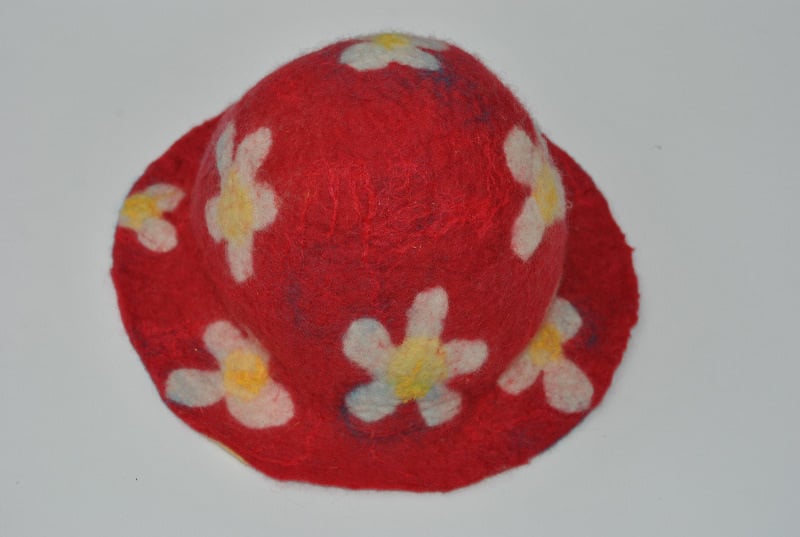
    wet felted hat with pre felt flowers

    (including how to cut shapes freehand or with templates)

    Prefelt (or pre-felt) is partially felted wool that behaves like a soft, flexible fabric. It cuts cleanly, holds its shape, and bonds beautifully to loose wool, making it one of the most useful materials in both needle felting and wet felting.

    This guide shows you how to use prefelt confidently.

    Whether you’re adding crisp motifs, clothing pieces, wings, leaves, or smooth coverage, prefelt gives you precision and speed without losing that handmade woolly magic.2019-02-19 11.31.41

    Cutting Prefelt: Freehand or With Templates

    You can cut prefelt freehand for organic shapes, or use a template when you want accuracy or matching pairs.

    Freehand Cutting

    Best for:

    • soft curves
    • natural shapes
    • quick decorative pieces

    Just draw lightly with tailor’s chalk or cut directly with sharp scissors.

    Using Templates (Freezer Paper or Tracing Paper)

    Templates help you cut precise, repeatable shapes.

    Freezer Paper Method

    Freezer paper sticks lightly to prefelt when ironed, just enough to stop slipping.

    Best for crisp, accurate shapes or tiny details.

    1. Draw or print your design on the paper side.
    2. Place shiny side down on the prefelt.
    3. Iron on low heat (no steam) it sticks lightly.
    4. Cut around the template.
    5. Peel off the paper.

    Why use it:

    • No slipping
    • Perfect for wings, petals, leaves, clothing pieces
    • Ideal for mirrored pairs and repeating shapes

    Tracing Paper Method

    Best for delicate prefelt or when you don’t want to iron.

    1. Trace or print your design.
    2. Pin lightly to the prefelt.
    3. Cut around the template.
    4. Remove the paper.

    Why use it:

    • Great for clear shapes
    • No heat required

    Using Prefelt in Needle Felting

    robin

    Prefelt is brilliant in needle felting because it gives you clean shapes, smooth surfaces, and structural strength without building everything from loose fibres.


    1. Appliqué Shapes

    Perfect for:

    • eyes, noses, cheeks
    • wings, leaves, feathers
    • clothing pieces
    • lettering and motifs

    How to use:

    • Cut your shape (freehand or template).
    • Place it on your needle felted base.
    • Tack with shallow, straight needle stabs.
    • Needle around the edges for crispness or lightly over the surface to blend.

    2. Fast, Smooth Coverage

    Ideal for doll faces, animal bellies, and clothing panels.

    How to use:

    • Cut a piece slightly larger than the area.
    • Lay it over your core wool.
    • Needle from the centre outward to avoid wrinkles.
    • Trim edges once partly attached.

    Gives a beautifully even finish.

    3. Clothing and Accessories

    Prefelt behaves like soft felt fabric.

    Use it for:

    • skirts, cloaks, sleeves
    • collars, cuffs, pockets
    • patterned clothing panels

    Cut, shape, and needle into place, then add details with loose wool.

    4. Structural Strength

    For thin or delicate parts (ears, wings, eyelids), prefelt adds stability without bulk.

    How to use:

    • Cut the shape.
    • Needle onto a thin wool layer.
    • Add a little loose wool on top to blend.
    • Shape edges with angled needle strokes.

    5. Needle‑Felted Pictures

    pre felt book mark

    Prefelt is perfect for:

    • backgrounds
    • silhouettes
    • hills, sky bands
    • bold graphic shapes

    Lay shapes onto a wool base and needle lightly to secure, then add shading with loose fibres.

    Using Prefelt in Wet Felting

    wet felting pic 5

    Prefelt is widely used in wet felting for crisp motifs, layered colour, and clean designs.

    1. Cut Your Shapes

    Use freehand or templates depending on the look you want.

    2. Arrange on Your Wool Layout

    Place shapes onto your unfelted wool base. Move them around until the composition feels right.

    3. Mist with Soapy Water

    A light spray helps the prefelt grip so it doesn’t shift.

    4. Tack Gently

    Cover with netting and rub lightly in small circles to secure the shapes.

    5. Felt as Normal

    Once everything is anchored, continue wet felting. The prefelt fibres migrate into the base wool and become part of the fabric.

    Tips for Best Results

    • For crisp edges → freezer paper + firm prefelt
    • For soft, blended edges → tracing paper + softer prefelt
    • For tiny shapes → freezer paper gives best control
    • For mirrored pairs → fold freezer paper before cutting
    • For repeating shapes → keep your templates and reuse them