The No‑Nonsense Needle Gauge Guide
Posted on
Felting Needle Gauge Guide
How Gauge Works
- Gauge = thickness of the needle
- Higher number → thinner needle
- Lower number → thicker needle

Posted on
Felting Needle Gauge Guide
How Gauge Works

Posted on
What an Awl Does in Felting
An awl opens space inside wool rather than felting fibres. It’s used to make holes for eyes or wires, create small indentations like nostrils or joint sockets, protect needles from strain, and shape firm wool without overâcompacting it. It’s most useful in dense 3D work where a needle can’t reach safely.

Posted on
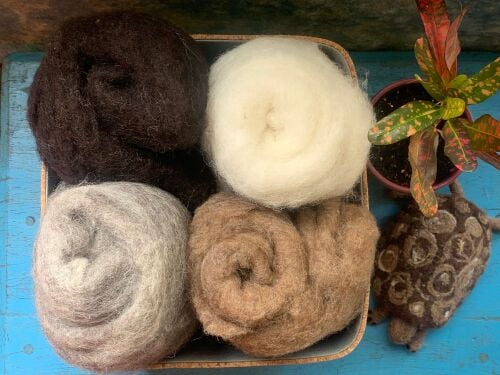
Guide to Wool Types for 3D Needle Felting
Choosing the right wool shapes how your sculptures behave under the needle. Some fibres build firm cores quickly, others create smooth outer layers, and some add texture or special effects. This guide breaks down the most common wool types used in 3D needle felting and what each one does best.

And remember: if your fibres aren’t behaving, they’re just shear rebels.
Posted on
What Are Nepps (and What They Actually Do in Felting)
Nepps are tiny, compact wool pills created during carding. Because the fibres are already tangled into tight little knots, they don’t draft, and they don’t fully integrate into surrounding wool the way regular roving does.
This is exactly what makes them useful: they sit on the surface of your felt and create texture, speckling, and organic irregularity.

Posted on
What Makes One Needle Different From Another?

Felting needles vary by: